The Gospel of Mark
Notes and Parallel Translations

An English Translation #
Chapter 1 #
ACCORDING TO MARK
1The beginning of the glad tidings
1εὐαγγελίου has a political connotation and perhaps there is an echo with Isaiah 40’s message of comfort in view of the return of YHWH to Zion.
of Jesus the Anointed.
2Earliest manuscripts omit “son of [a] god” (υἱοῦ θεοῦ). This is a significant honorific title for Jesus in Mark and is synonymous with “Christ (Messiah)” meaning Anointed One (cf. 3.11). It thus has the Davidic connotation of being God’s authoritative agent (cf. 2 Sam 7.13–14; Ps 2.7) but does not by itself attribute a divine status. I.e., it signals messianic kingship—not necessarily abstract divinity in a metaphysical sense—functioning at least as a political (counter-imperial?) claim. E.g. contrast this with the divi filius (“son of a god”/“son of the deified [one]”) claimed by Augustus following the deification of Julius Caesar in 42 BCE which was not a metaphysical claim to be a god himself (i.e. deus) but rather a claim to be the son of a deified mortal. cf. also Livy, History of Rome, 1.16.
2aAs it is written in Isaiah the prophet:
3The reference conflates material from Isa 40.3 with Ex 23.20, Mal 3.1. Some manuscripts have only “in the prophets” while others have “in Isaiah the prophet”. The latter therefore slightly misattribute the verses. The passages take on a new meaning not in their original contexts; here the author reads them as allusions to John the Baptist.
 Coloured postcard of the Jordan River.
c. 1925 (Public Domain)
Karimeh Abbud
10Just when he was coming up out of the water, he saw the heavens torn apart and the spirit descending like a dove on him.
11aAnd a voice came from heaven,
Coloured postcard of the Jordan River.
c. 1925 (Public Domain)
Karimeh Abbud
10Just when he was coming up out of the water, he saw the heavens torn apart and the spirit descending like a dove on him.
11aAnd a voice came from heaven,
14Now after John was put in custody, Jesus came to Galilee, pronouncing the glad tidings of God, and saying,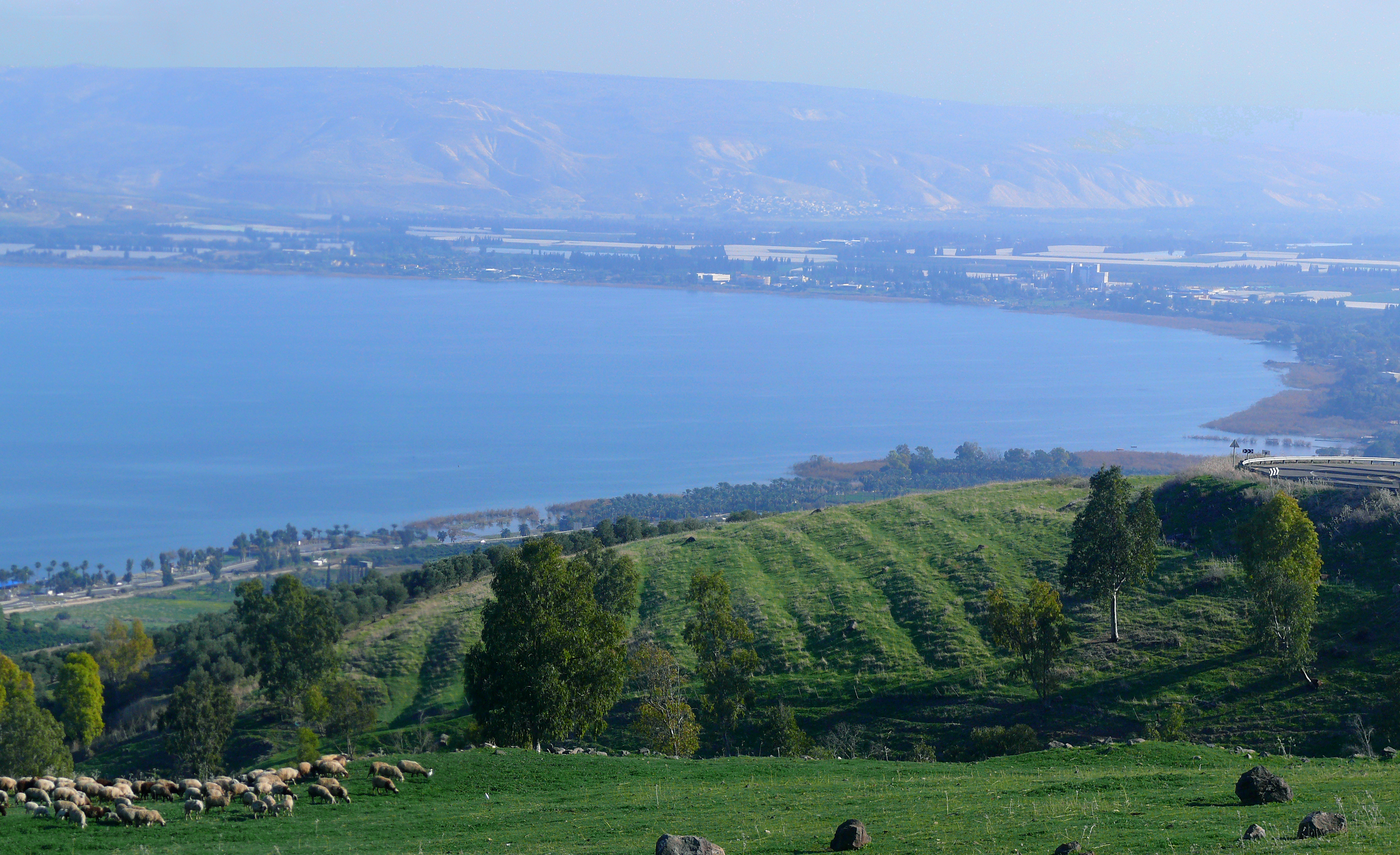 Lake Kinneret (Sea of Galilee), Israel.
Panorama of the southern end, 5 Feb 2014
Zachi Evenor
17“Come after me!” Jesus said to them, “and I’ll have you fishing for people!
18Straightaway they left their nets and followed him.
19And going on a little further, he saw James, Zebedee’s son, and John his brother who were in their boat making good the nets.
20And he called them straightaway. They left their father Zebedee behind in the boat with the hired hands,
11Suggests that Zebedee’s family had enough means to hire μισθωτῶν (“wage workers”/“contractors”). These were people who neither owned the equipment nor the produce; their primary loyalty was to the wage.
and went after him.
Lake Kinneret (Sea of Galilee), Israel.
Panorama of the southern end, 5 Feb 2014
Zachi Evenor
17“Come after me!” Jesus said to them, “and I’ll have you fishing for people!
18Straightaway they left their nets and followed him.
19And going on a little further, he saw James, Zebedee’s son, and John his brother who were in their boat making good the nets.
20And he called them straightaway. They left their father Zebedee behind in the boat with the hired hands,
11Suggests that Zebedee’s family had enough means to hire μισθωτῶν (“wage workers”/“contractors”). These were people who neither owned the equipment nor the produce; their primary loyalty was to the wage.
and went after him.
21Then they went to Capernaum 12A Greek transliteraton of Kfar Nahum meaning “village of comfort”. and, on the sabbath, Jesus went straight to the synagogue and was there teaching.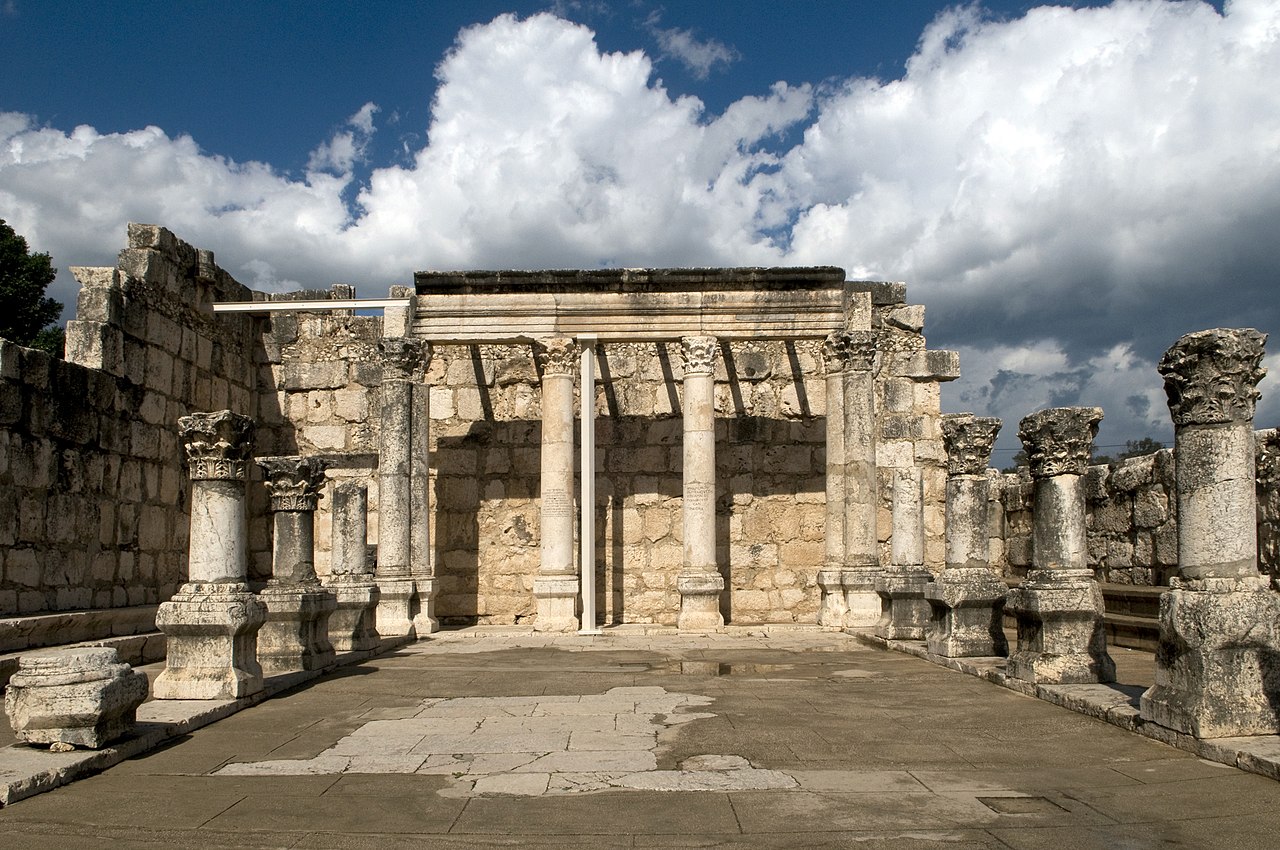 Ruins of the 4th century synagogue at Capernaum, Northern Israel.
It is debated as to whether an older synagogue is buried underneath.
UNESCO
22And they were astounded by his teaching, because he taught them on the basis of his personal authority, disregarding the traditional precedent of the Torah scholars.
13Slightly looser translation here to get across the sense of what’s going on. Jesus’ behaviour was a significant break from tradition where Torah interpretation was based off a “Chain of Tradition” (Shalshelet Ha-Kabbalah). The validity of interpretation was dependent on the authority of a chain being cited, similar to the modern practice of legal precedent or academic citation. E.g. “Rabbi Yoḥanan said in the name of Rabbi Yosei: How do we know that the Holy One, Blessed be He, prays? As it is stated: ‘I will bring them to My holy mountain and make them joyful in My house of prayer’ (Isaiah 56.7)” (Berakhot 7a). The astoundment at Jesus’ behaviour is not necessarily favourable. Indeed, the synagogue may be perceiving Jesus as lacking of credentials or pedigree.
23And all of a sudden, in their synagogue, there was a man with an impure spirit.
24“What have you to do with us, Jesus of Nazareth?” he yelled. “Have you come to utterly destroy us? I know who you are, the Consecrated One of God.”
25Jesus rebuked him, saying, “Shut up and come out of him!”
26Convulsing him and crying out in an almighty shriek, the unclean spirit came out of him.
27Everyone was shocked, debating amongst themselves saying, “What is this? A new teaching with authority!” He even gives orders to the impure spirits, and they answer to him.
28At once, word spread of him everywhere throughout the whole country round about Galilee.
Ruins of the 4th century synagogue at Capernaum, Northern Israel.
It is debated as to whether an older synagogue is buried underneath.
UNESCO
22And they were astounded by his teaching, because he taught them on the basis of his personal authority, disregarding the traditional precedent of the Torah scholars.
13Slightly looser translation here to get across the sense of what’s going on. Jesus’ behaviour was a significant break from tradition where Torah interpretation was based off a “Chain of Tradition” (Shalshelet Ha-Kabbalah). The validity of interpretation was dependent on the authority of a chain being cited, similar to the modern practice of legal precedent or academic citation. E.g. “Rabbi Yoḥanan said in the name of Rabbi Yosei: How do we know that the Holy One, Blessed be He, prays? As it is stated: ‘I will bring them to My holy mountain and make them joyful in My house of prayer’ (Isaiah 56.7)” (Berakhot 7a). The astoundment at Jesus’ behaviour is not necessarily favourable. Indeed, the synagogue may be perceiving Jesus as lacking of credentials or pedigree.
23And all of a sudden, in their synagogue, there was a man with an impure spirit.
24“What have you to do with us, Jesus of Nazareth?” he yelled. “Have you come to utterly destroy us? I know who you are, the Consecrated One of God.”
25Jesus rebuked him, saying, “Shut up and come out of him!”
26Convulsing him and crying out in an almighty shriek, the unclean spirit came out of him.
27Everyone was shocked, debating amongst themselves saying, “What is this? A new teaching with authority!” He even gives orders to the impure spirits, and they answer to him.
28At once, word spread of him everywhere throughout the whole country round about Galilee.
29And promptly, having left the synagogue, they arrived at the house of Simon and Andrew with James and John. 30Now Simon’s mother-in-law was in bed with a fever and, right away, they tell him about her. 31Drawing near, he roused her, taking hold of her hand; the fever left her, and she went on to host him. 14Here διηκόνει means serving in a practical sense—i.e. providing hospitality to Jesus. Her immediate return to service proves the completeness of the healing being fully restored to strength.
32Now, when evening had come, as the sun was setting, 15Possibly, being still the Sabbath, they waited for the sun to set so as not to violate the prohibition against carrying loads. they would bring to him all who were sick and possessed Some of what Mark describes here as τοὺς δαιμονιζομένους may therefore better fit under our modern category of “mental illness”. However, it may be simplistic and misleading to reduce these phenomena as merely a pre-modern explanation for mental illness. by godlings 16Ancient Near Eastern notions of δαιμόνιον from near the time of Mark can differ substantially from the modern one. E.g. for contemporaries like Plutarch or Philo a daimōnion was an intermediate being—higher than humans but lower than the gods—being neither necessarily good or evil: viz. Acts 17.18 xenōn daimoniōn (foreign gods / new spiritual beings), Plutarch (The Obsolescence of Oracles 415A; On the Sign of Socrates 593D), Philo (On the Giants 6, 16; On Dreams 1.141). The LXX translators, being both steeped in Hebrew theology and a Hellenistic world, used δαιμόνιον to render Hebrew terms for foreign gods and spirits condemned by Israel’s prophets. E.g. Deut 32.17: ἔθυσαν δαιμονίοις καὶ οὐ θεῷ” (“they sacrificed to daimónia and not to God,”) for Hebrew šēdîm (שֵׁדִים), malevolent powers associated with idolatry; Psalm 95(96).5 “all the gods of the nations are daimónia,”. It seems likely that Mark takes on LXX’s polemical sense of δαιμόνιον. However, in their Hellenistic milieu, δαιμόνιον still carried a broad semantic field, as noted above. I have translated δαιμόνιον as “godlings” to capture the polyphonic possibilities that Mark may have intended. Mark takes their ontological status for granted. 33The whole town was gathering around the door. 17Probably hyperbolic as a figure of speech. Archaeological estimates suggest a population in the order of 1000 people in Capernaum at the time of Jesus. 34And he healed many people suffering from all kinds of illnesses, and he drove out many godlings, and he permitted the godlings not to speak, because they were acquainted with him.
35Very early, while it was still dark, Jesus got up and went out, off into to the wild, and prayed there. 36Simon, and those with him, followed closely. 37Finding him they say, 18A case of the historical present and throughout. “Everyone’s inquiring for you!” 38And Jesus says to them, “Let’s go somewhere else to the neighbouring villages, so I can preach there too; I came out for this reason.” 39So he went into their synagogues, throughout the whole of Galilee, preaching and expelling godlings.
40A man with an impure skin disease 19See e.g. Gryzbowski and Nita (2016) “Leprosy in the Bible”, Cl. in Derm. (34), 1. The notion being referenced here probably harks back to tzaraat in Leviticus 13-14. The term referred not only to a skin disease, but also to the state of ritual impurity and punishment for sins. The exact nature of tzaraat remains unknown, possibly being related to any number of modern conditions not limited to psoriasis or dermatitis. The modern condition of leprosy (or Hansen’s disease) became interchangeable with the biblical leprosy due to two inaccurate translations: The Hebrew tzaraat was first translated into Greek as λεπρός in the sixth century, and later, translated into Arabic as lepra in the ninth century. comes up to him, begging him on his knees, saying, “Please, would you make me pure?” 41Moved to the heart, 20Literally, “organ-ed”/“gutted”; σπλάγχνον means “internal organs” esp. the heart, lungs, liver, kidneys, which in sacrifices were reserved to be eaten by the sacrificers at the beginning of the feast. By metonymy, can mean “sacrificial feast”. Metaphorically, the expression functions similarly to the English “heart” / “gall” being the seat of intense feelings and affections. See LSJ for usages. The verb form used throughout the New Testament is virtually non-existent in classical literature. he reached out his hand and touched him, and says to him, “I am pleased to do it; be pure!” 42The disease left him at once, and he was pure. 43He sent him away right away, with a stern warning. 44And he says to him: “Mind that you say nothing to anyone! But go and present yourself to the priest, and offer for your purification what Moses commanded, as proof for them." 21The priest may be associated with the synagogue at Capernaum but perhaps the rite had to be practised in Jerusalem. Josephus describes priestly leadership in Jerusalem but also mentions priests living outside the city, including in Galilee and notes their influence in towns like Sepphoris and Jotapata. Josephus also records that some priests in Galilee were wealthy landowners, which aligns with evidence that some priestly families had estates outside Jerusalem. The Mishnah (compiled c. 200 CE) contains laws about priests and Temple-related practices that may reflect earlier traditions. Tractates like Ma’aserot (on tithes) and Pesachim (on Passover laws) suggest priests collected tithes and provided religious instruction in the countryside. Taanit 4.5 also mentions that after the Temple’s destruction, priests continued some of their functions outside Jerusalem albeit, this post-dates events being described in Mark. 45But the man went out and began to announce it everywhere and spread the word, to the extent that Jesus could no longer go openly into a city. He stayed out in the open country, and people came to him from all around. Ἀρχὴ τοῦ εὐαγγελίου Ἰησοῦ Χριστοῦ (Υἱοῦ Θεοῦ). Καθὼς γέγραπται ἐν τῷ Ἡσαΐᾳ τῷ προφήτῃ Ἰδοὺ ἀποστέλλω τὸν ἄγγελόν μου πρὸ προσώπου σου, ὃς κατασκευάσει τὴν ὁδόν σου· φωνὴ βοῶντος ἐν τῇ ἐρήμῳ Ἑτοιμάσατε τὴν ὁδὸν Κυρίου, εὐθείας ποιεῖτε τὰς τρίβους αὐτοῦ, ἐγένετο Ἰωάνης ὁ βαπτίζων ἐν τῇ ἐρήμῳ κηρύσσων βάπτισμα μετανοίας εἰς ἄφεσιν ἁμαρτιῶν. καὶ ἐξεπορεύετο πρὸς αὐτὸν πᾶσα ἡ Ἰουδαία χώρα καὶ οἱ Ἱεροσολυμεῖται πάντες, καὶ ἐβαπτίζοντο ὑπ’ αὐτοῦ ἐν τῷ Ἰορδάνῃ ποταμῷ ἐξομολογούμενοι τὰς ἁμαρτίας αὐτῶν. καὶ ἦν ὁ Ἰωάνης ἐνδεδυμένος τρίχας καμήλου καὶ ζώνην δερματίνην περὶ τὴν ὀσφὺν αὐτοῦ, καὶ ἔσθων ἀκρίδας καὶ μέλι ἄγριον. καὶ ἐκήρυσσεν λέγων Ἔρχεται ὁ ἰσχυρότερός μου ὀπίσω μου, οὗ οὐκ εἰμὶ ἱκανὸς κύψας λῦσαι τὸν ἱμάντα τῶν ὑποδημάτων αὐτοῦ. ἐγὼ ἐβάπτισα ὑμᾶς ὕδατι, αὐτὸς δὲ βαπτίσει ὑμᾶς Πνεύματι Ἁγίῳ. Καὶ ἐγένετο ἐν ἐκείναις ταῖς ἡμέραις ἦλθεν Ἰησοῦς ἀπὸ Ναζαρὲτ τῆς Γαλιλαίας καὶ ἐβαπτίσθη εἰς τὸν Ἰορδάνην ὑπὸ Ἰωάνου. καὶ εὐθὺς ἀναβαίνων ἐκ τοῦ ὕδατος εἶδεν σχιζομένους τοὺς οὐρανοὺς καὶ τὸ Πνεῦμα ὡς περιστερὰν καταβαῖνον εἰς αὐτόν· καὶ φωνὴ ἐγένετο ἐκ τῶν οὐρανῶν Σὺ εἶ ὁ Υἱός μου ὁ ἀγαπητός, ἐν σοὶ εὐδόκησα. Καὶ εὐθὺς τὸ Πνεῦμα αὐτὸν ἐκβάλλει εἰς τὴν ἔρημον. καὶ ἦν ἐν τῇ ἐρήμῳ τεσσεράκοντα ἡμέρας πειραζόμενος ὑπὸ τοῦ Σατανᾶ, καὶ ἦν μετὰ τῶν θηρίων, καὶ οἱ ἄγγελοι διηκόνουν αὐτῷ. Καὶ μετὰ τὸ παραδοθῆναι τὸν Ἰωάνην ἦλθεν ὁ Ἰησοῦς εἰς τὴν Γαλιλαίαν κηρύσσων τὸ εὐαγγέλιον τοῦ Θεοῦ καὶ λέγων ὅτι Πεπλήρωται ὁ καιρὸς καὶ ἤγγικεν ἡ βασιλεία τοῦ Θεοῦ· μετανοεῖτε καὶ πιστεύετε ἐν τῷ εὐαγγελίῳ. Καὶ παράγων παρὰ τὴν θάλασσαν τῆς Γαλιλαίας εἶδεν Σίμωνα καὶ Ἀνδρέαν τὸν ἀδελφὸν Σίμωνος ἀμφιβάλλοντας ἐν τῇ θαλάσσῃ· ἦσαν γὰρ ἁλεεῖς. καὶ εἶπεν αὐτοῖς ὁ Ἰησοῦς Δεῦτε ὀπίσω μου, καὶ ποιήσω ὑμᾶς γενέσθαι ἁλεεῖς ἀνθρώπων. καὶ εὐθὺς ἀφέντες τὰ δίκτυα ἠκολούθησαν αὐτῷ. Καὶ προβὰς ὀλίγον εἶδεν Ἰάκωβον τὸν τοῦ Ζεβεδαίου καὶ Ἰωάνην τὸν ἀδελφὸν αὐτοῦ, καὶ αὐτοὺς ἐν τῷ πλοίῳ καταρτίζοντας τὰ δίκτυα, καὶ εὐθὺς ἐκάλεσεν αὐτούς· καὶ ἀφέντες τὸν πατέρα αὐτῶν Ζεβεδαῖον ἐν τῷ πλοίῳ μετὰ τῶν μισθωτῶν ἀπῆλθον ὀπίσω αὐτοῦ. Καὶ εἰσπορεύονται εἰς Καφαρναούμ· καὶ εὐθὺς τοῖς σάββασιν εἰσελθὼν εἰς τὴν συναγωγὴν ἐδίδασκεν. καὶ ἐξεπλήσσοντο ἐπὶ τῇ διδαχῇ αὐτοῦ· ἦν γὰρ διδάσκων αὐτοὺς ὡς ἐξουσίαν ἔχων, καὶ οὐχ ὡς οἱ γραμματεῖς. Καὶ εὐθὺς ἦν ἐν τῇ συναγωγῇ αὐτῶν ἄνθρωπος ἐν πνεύματι ἀκαθάρτῳ, καὶ ἀνέκραξεν λέγων Τί ἡμῖν καὶ σοί, Ἰησοῦ Ναζαρηνέ; ἦλθες ἀπολέσαι ἡμᾶς. οἶδά σε τίς εἶ, ὁ Ἅγιος τοῦ Θεοῦ. καὶ ἐπετίμησεν αὐτῷ ὁ Ἰησοῦς Φιμώθητι καὶ ἔξελθε ἐξ αὐτοῦ. καὶ σπαράξαν αὐτὸν τὸ πνεῦμα τὸ ἀκάθαρτον καὶ φωνῆσαν φωνῇ μεγάλῃ ἐξῆλθεν ἐξ αὐτοῦ. καὶ ἐθαμβήθησαν ἅπαντες, ὥστε συνζητεῖν αὐτοὺς λέγοντας Τί ἐστιν τοῦτο; διδαχὴ καινή κατ’ ἐξουσίαν· καὶ τοῖς πνεύμασι τοῖς ἀκαθάρτοις ἐπιτάσσει, καὶ ὑπακούουσιν αὐτῷ. καὶ ἐξῆλθεν ἡ ἀκοὴ αὐτοῦ εὐθὺς πανταχοῦ εἰς ὅλην τὴν περίχωρον τῆς Γαλιλαίας. Καὶ εὐθὺς ἐκ τῆς συναγωγῆς ἐξελθόντες ἦλθον εἰς τὴν οἰκίαν Σίμωνος καὶ Ἀνδρέου μετὰ Ἰακώβου καὶ Ἰωάνου. ἡ δὲ πενθερὰ Σίμωνος κατέκειτο πυρέσσουσα, καὶ εὐθὺς λέγουσιν αὐτῷ περὶ αὐτῆς. καὶ προσελθὼν ἤγειρεν αὐτὴν κρατήσας τῆς χειρός· καὶ ἀφῆκεν αὐτὴν ὁ πυρετός, καὶ διηκόνει αὐτοῖς. Ὀψίας δὲ γενομένης, ὅτε ἔδυσεν ὁ ἥλιος, ἔφερον πρὸς αὐτὸν πάντας τοὺς κακῶς ἔχοντας καὶ τοὺς δαιμονιζομένους· καὶ ἦν ὅλη ἡ πόλις ἐπισυνηγμένη πρὸς τὴν θύραν. καὶ ἐθεράπευσεν πολλοὺς κακῶς ἔχοντας ποικίλαις νόσοις, καὶ δαιμόνια πολλὰ ἐξέβαλεν, καὶ οὐκ ἤφιεν λαλεῖν τὰ δαιμόνια, ὅτι ᾔδεισαν αὐτόν. Καὶ πρωῒ ἔννυχα λίαν ἀναστὰς ἐξῆλθεν καὶ ἀπῆλθεν εἰς ἔρημον τόπον, κἀκεῖ προσηύχετο. καὶ κατεδίωξεν αὐτὸν Σίμων καὶ οἱ μετ’ αὐτοῦ, καὶ εὗρον αὐτὸν καὶ λέγουσιν αὐτῷ ὅτι Πάντες ζητοῦσίν σε. καὶ λέγει αὐτοῖς· Ἄγωμεν ἀλλαχοῦ εἰς τὰς ἐχομένας κωμοπόλεις, ἵνα καὶ ἐκεῖ κηρύξω· εἰς τοῦτο γὰρ ἐξῆλθον. καὶ ἦλθεν κηρύσσων εἰς τὰς συναγωγὰς αὐτῶν εἰς ὅλην τὴν Γαλιλαίαν καὶ τὰ δαιμόνια ἐκβάλλων. Καὶ ἔρχεται πρὸς αὐτὸν λεπρὸς παρακαλῶν αὐτὸν καὶ γονυπετῶν λέγων αὐτῷ ὅτι Ἐὰν θέλῃς δύνασαί με καθαρίσαι. καὶ σπλαγχνισθεὶς ἐκτείνας τὴν χεῖρα αὐτοῦ ἥψατο καὶ λέγει αὐτῷ Θέλω, καθαρίσθητι. καὶ εὐθὺς ἀπῆλθεν ἀπ’ αὐτοῦ ἡ λέπρα, καὶ ἐκαθερίσθη. καὶ ἐμβριμησάμενος αὐτῷ εὐθὺς ἐξέβαλεν αὐτόν, καὶ λέγει αὐτῷ Ὅρα μηδενὶ μηδὲν εἴπῃς, ἀλλὰ ὕπαγε σεαυτὸν δεῖξον τῷ ἱερεῖ καὶ προσένεγκε περὶ τοῦ καθαρισμοῦ σου ἃ προσέταξεν Μωϋσῆς εἰς μαρτύριον αὐτοῖς. ὁ δὲ ἐξελθὼν ἤρξατο κηρύσσειν πολλὰ καὶ διαφημίζειν τὸν λόγον, ὥστε μηκέτι αὐτὸν δύνασθαι φανερῶς εἰς πόλιν εἰσελθεῖν, ἀλλ’ ἔξω ἐπ’ ἐρήμοις τόποις ἦν· καὶ ἤρχοντο πρὸς αὐτὸν πάντοθεν. Ἀρχὴ τοῦ εὐαγγελίου Ἰησοῦ ⸀χριστοῦ. ⸀Καθὼς γέγραπται ἐν ⸂τῷ Ἠσαΐᾳ τῷ προφήτῃ⸃· ⸀Ἰδοὺ ἀποστέλλω τὸν ἄγγελόν μου πρὸ προσώπου σου, ὃς κατασκευάσει τὴν ὁδόν ⸀σου· φωνὴ βοῶντος ἐν τῇ ἐρήμῳ· Ἑτοιμάσατε τὴν ὁδὸν κυρίου, εὐθείας ποιεῖτε τὰς τρίβους αὐτοῦ, ἐγένετο Ἰωάννης ⸀ὁ βαπτίζων ἐν τῇ ⸀ἐρήμῳ κηρύσσων βάπτισμα μετανοίας εἰς ἄφεσιν ἁμαρτιῶν. καὶ ἐξεπορεύετο πρὸς αὐτὸν πᾶσα ἡ Ἰουδαία χώρα καὶ οἱ Ἱεροσολυμῖται ⸂πάντες, καὶ ἐβαπτίζοντο⸃ ⸂ὑπ’ αὐτοῦ ἐν τῷ Ἰορδάνῃ ποταμῷ⸃ ἐξομολογούμενοι τὰς ἁμαρτίας αὐτῶν. ⸂καὶ ἦν⸃ ὁ Ἰωάννης ἐνδεδυμένος τρίχας καμήλου καὶ ζώνην δερματίνην περὶ τὴν ὀσφὺν αὐτοῦ, καὶ ἔσθων ἀκρίδας καὶ μέλι ἄγριον. καὶ ἐκήρυσσεν λέγων· Ἔρχεται ὁ ἰσχυρότερός μου ὀπίσω μου, οὗ οὐκ εἰμὶ ἱκανὸς κύψας λῦσαι τὸν ἱμάντα τῶν ὑποδημάτων αὐτοῦ· ⸀ἐγὼ ἐβάπτισα ⸀ὑμᾶς ὕδατι, αὐτὸς δὲ βαπτίσει ὑμᾶς ⸀ἐν πνεύματι ἁγίῳ. Καὶ ἐγένετο ἐν ἐκείναις ταῖς ἡμέραις ἦλθεν Ἰησοῦς ἀπὸ Ναζαρὲτ τῆς Γαλιλαίας καὶ ἐβαπτίσθη ⸂εἰς τὸν Ἰορδάνην ὑπὸ Ἰωάννου⸃. καὶ ⸀εὐθὺς ἀναβαίνων ⸀ἐκ τοῦ ὕδατος εἶδεν σχιζομένους τοὺς οὐρανοὺς καὶ τὸ πνεῦμα ⸀ὡς περιστερὰν καταβαῖνον ⸀εἰς αὐτόν· καὶ φωνὴ ἐγένετο ἐκ τῶν οὐρανῶν· Σὺ εἶ ὁ υἱός μου ὁ ἀγαπητός, ἐν ⸀σοὶ εὐδόκησα. Καὶ εὐθὺς τὸ πνεῦμα αὐτὸν ἐκβάλλει εἰς τὴν ἔρημον. καὶ ⸀ἦν ἐν τῇ ἐρήμῳ ⸂τεσσεράκοντα ἡμέρας⸃ πειραζόμενος ὑπὸ τοῦ Σατανᾶ, καὶ ἦν μετὰ τῶν θηρίων, καὶ οἱ ἄγγελοι διηκόνουν αὐτῷ. ⸂Καὶ μετὰ⸃ τὸ παραδοθῆναι τὸν Ἰωάννην ἦλθεν ὁ Ἰησοῦς εἰς τὴν Γαλιλαίαν κηρύσσων τὸ ⸀εὐαγγέλιον τοῦ θεοῦ καὶ λέγων ὅτι Πεπλήρωται ὁ καιρὸς καὶ ἤγγικεν ἡ βασιλεία τοῦ θεοῦ· μετανοεῖτε καὶ πιστεύετε ἐν τῷ εὐαγγελίῳ. ⸂Καὶ παράγων⸃ παρὰ τὴν θάλασσαν τῆς Γαλιλαίας εἶδεν Σίμωνα καὶ Ἀνδρέαν τὸν ⸀ἀδελφὸν Σίμωνος ⸀ἀμφιβάλλοντας ἐν τῇ θαλάσσῃ, ἦσαν γὰρ ἁλιεῖς· καὶ εἶπεν αὐτοῖς ὁ Ἰησοῦς· Δεῦτε ὀπίσω μου, καὶ ποιήσω ὑμᾶς γενέσθαι ἁλιεῖς ἀνθρώπων. καὶ ⸀εὐθὺς ἀφέντες τὰ ⸀δίκτυα ἠκολούθησαν αὐτῷ. καὶ ⸀προβὰς ὀλίγον εἶδεν Ἰάκωβον τὸν τοῦ Ζεβεδαίου καὶ Ἰωάννην τὸν ἀδελφὸν αὐτοῦ, καὶ αὐτοὺς ἐν τῷ πλοίῳ καταρτίζοντας τὰ δίκτυα, καὶ ⸀εὐθὺς ἐκάλεσεν αὐτούς. καὶ ἀφέντες τὸν πατέρα αὐτῶν Ζεβεδαῖον ἐν τῷ πλοίῳ μετὰ τῶν μισθωτῶν ἀπῆλθον ὀπίσω αὐτοῦ. Καὶ εἰσπορεύονται εἰς Καφαρναούμ. καὶ ⸀εὐθὺς τοῖς σάββασιν ⸂ἐδίδασκεν εἰς τὴν συναγωγήν⸃. καὶ ἐξεπλήσσοντο ἐπὶ τῇ διδαχῇ αὐτοῦ, ἦν γὰρ διδάσκων αὐτοὺς ὡς ἐξουσίαν ἔχων καὶ οὐχ ὡς οἱ γραμματεῖς. καὶ ⸀εὐθὺς ἦν ἐν τῇ συναγωγῇ αὐτῶν ἄνθρωπος ἐν πνεύματι ἀκαθάρτῳ καὶ ἀνέκραξεν λέγων· ⸀Τί ἡμῖν καὶ σοί, Ἰησοῦ Ναζαρηνέ; ἦλθες ἀπολέσαι ἡμᾶς; οἶδά σε τίς εἶ, ὁ ἅγιος τοῦ θεοῦ. καὶ ἐπετίμησεν αὐτῷ ὁ Ἰησοῦς λέγων· Φιμώθητι καὶ ἔξελθε ἐξ αὐτοῦ. καὶ σπαράξαν αὐτὸν τὸ πνεῦμα τὸ ἀκάθαρτον καὶ ⸀φωνῆσαν φωνῇ μεγάλῃ ἐξῆλθεν ἐξ αὐτοῦ. καὶ ἐθαμβήθησαν ⸀ἅπαντες, ὥστε συζητεῖν ⸂πρὸς ἑαυτοὺς⸃ λέγοντας· Τί ἐστιν τοῦτο; ⸂διδαχὴ καινή⸃· κατ’ ἐξουσίαν καὶ τοῖς πνεύμασι τοῖς ἀκαθάρτοις ἐπιτάσσει, καὶ ὑπακούουσιν αὐτῷ. ⸂καὶ ἐξῆλθεν⸃ ἡ ἀκοὴ αὐτοῦ εὐθὺς ⸀πανταχοῦ εἰς ὅλην τὴν περίχωρον τῆς Γαλιλαίας. Καὶ ⸀εὐθὺς ἐκ τῆς συναγωγῆς ⸂ἐξελθόντες ἦλθον⸃ εἰς τὴν οἰκίαν Σίμωνος καὶ Ἀνδρέου μετὰ Ἰακώβου καὶ Ἰωάννου. ἡ δὲ πενθερὰ Σίμωνος κατέκειτο πυρέσσουσα, καὶ ⸀εὐθὺς λέγουσιν αὐτῷ περὶ αὐτῆς. καὶ προσελθὼν ἤγειρεν αὐτὴν κρατήσας τῆς ⸀χειρός· καὶ ἀφῆκεν αὐτὴν ὁ ⸀πυρετός, καὶ διηκόνει αὐτοῖς. Ὀψίας δὲ γενομένης, ὅτε ⸀ἔδυ ὁ ἥλιος, ἔφερον πρὸς αὐτὸν πάντας τοὺς κακῶς ἔχοντας καὶ τοὺς δαιμονιζομένους· καὶ ⸂ἦν ὅλη ἡ πόλις ἐπισυνηγμένη⸃ πρὸς τὴν θύραν. καὶ ἐθεράπευσεν πολλοὺς κακῶς ἔχοντας ποικίλαις νόσοις, καὶ δαιμόνια πολλὰ ἐξέβαλεν, καὶ οὐκ ἤφιεν λαλεῖν τὰ δαιμόνια, ὅτι ᾔδεισαν ⸀αὐτόν. Καὶ πρωῒ ἔννυχα λίαν ἀναστὰς ἐξῆλθεν καὶ ἀπῆλθεν εἰς ἔρημον τόπον κἀκεῖ προσηύχετο. καὶ ⸀κατεδίωξεν αὐτὸν ⸀Σίμων καὶ οἱ μετ’ αὐτοῦ, καὶ ⸂εὗρον αὐτὸν καὶ⸃ λέγουσιν αὐτῷ ὅτι Πάντες ⸂ζητοῦσίν σε⸃. καὶ λέγει αὐτοῖς· Ἄγωμεν ⸀ἀλλαχοῦ εἰς τὰς ἐχομένας κωμοπόλεις, ἵνα καὶ ἐκεῖ κηρύξω, εἰς τοῦτο γὰρ ⸀ἐξῆλθον. καὶ ⸀ἦλθεν κηρύσσων ⸂εἰς τὰς συναγωγὰς⸃ αὐτῶν εἰς ὅλην τὴν Γαλιλαίαν καὶ τὰ δαιμόνια ἐκβάλλων. Καὶ ἔρχεται πρὸς αὐτὸν λεπρὸς παρακαλῶν αὐτὸν καὶ ⸀γονυπετῶν λέγων αὐτῷ ὅτι Ἐὰν θέλῃς δύνασαί με καθαρίσαι. ⸀καὶ ⸀ὀργισθεὶς ἐκτείνας τὴν χεῖρα ⸂αὐτοῦ ἥψατο⸃ καὶ λέγει αὐτῷ· Θέλω, καθαρίσθητι· καὶ ⸀εὐθὺς ἀπῆλθεν ἀπ’ αὐτοῦ ἡ λέπρα, καὶ ἐκαθαρίσθη. καὶ ἐμβριμησάμενος αὐτῷ ⸀εὐθὺς ἐξέβαλεν αὐτόν, καὶ λέγει αὐτῷ· Ὅρα μηδενὶ μηδὲν εἴπῃς, ἀλλὰ ὕπαγε σεαυτὸν δεῖξον τῷ ἱερεῖ καὶ προσένεγκε περὶ τοῦ καθαρισμοῦ σου ἃ προσέταξεν Μωϋσῆς εἰς μαρτύριον αὐτοῖς. ὁ δὲ ἐξελθὼν ἤρξατο κηρύσσειν πολλὰ καὶ διαφημίζειν τὸν λόγον, ὥστε μηκέτι αὐτὸν δύνασθαι φανερῶς εἰς πόλιν εἰσελθεῖν, ἀλλὰ ἔξω ⸀ἐπ’ ἐρήμοις τόποις ἦν· καὶ ἤρχοντο πρὸς αὐτὸν ⸀πάντοθεν. αρχη του ευαγγελιου ιησου χριστου υιου του θεου ως γεγραπται εν τοις προφηταις ιδου εγω αποστελλω τον αγγελον μου προ προσωπου σου ος κατασκευασει την οδον σου εμπροσθεν σου φωνη βοωντος εν τη ερημω ετοιμασατε την οδον κυριου ευθειας ποιειτε τας τριβους αυτου εγενετο ιωαννης βαπτιζων εν τη ερημω και κηρυσσων βαπτισμα μετανοιας εις αφεσιν αμαρτιων και εξεπορευετο προς αυτον πασα η ιουδαια χωρα και οι ιεροσολυμιται και εβαπτιζοντο παντες εν τω ιορδανη ποταμω υπ αυτου εξομολογουμενοι τας αμαρτιας αυτων ην δε ιωαννης ενδεδυμενος τριχας καμηλου και ζωνην δερματινην περι την οσφυν αυτου και εσθιων ακριδας και μελι αγριον και εκηρυσσεν λεγων ερχεται ο ισχυροτερος μου οπισω μου ου ουκ ειμι ικανος κυψας λυσαι τον ιμαντα των υποδηματων αυτου εγω μεν εβαπτισα υμας εν υδατι αυτος δε βαπτισει υμας εν πνευματι αγιω και εγενετο εν εκειναις ταις ημεραις ηλθεν ιησους απο ναζαρετ της γαλιλαιας και εβαπτισθη υπο ιωαννου εις τον ιορδανην και ευθεως αναβαινων απο του υδατος ειδεν σχιζομενους τους ουρανους και το πνευμα ωσει περιστεραν καταβαινον επ αυτον και φωνη εγενετο εκ των ουρανων συ ει ο υιος μου ο αγαπητος εν ω ευδοκησα και ευθυς το πνευμα αυτον εκβαλλει εις την ερημον και ην εκει εν τη ερημω ημερας τεσσαρακοντα πειραζομενος υπο του σατανα και ην μετα των θηριων και οι αγγελοι διηκονουν αυτω μετα δε το παραδοθηναι τον ιωαννην ηλθεν ο ιησους εις την γαλιλαιαν κηρυσσων το ευαγγελιον της βασιλειας του θεου και λεγων οτι πεπληρωται ο καιρος και ηγγικεν η βασιλεια του θεου μετανοειτε και πιστευετε εν τω ευαγγελιω περιπατων δε παρα την θαλασσαν της γαλιλαιας ειδεν σιμωνα και ανδρεαν τον αδελφον αυτου βαλλοντας αμφιβληστρον εν τη θαλασση ησαν γαρ αλιεις και ειπεν αυτοις ο ιησους δευτε οπισω μου και ποιησω υμας γενεσθαι αλιεις ανθρωπων και ευθεως αφεντες τα δικτυα αυτων ηκολουθησαν αυτω και προβας εκειθεν ολιγον ειδεν ιακωβον τον του ζεβεδαιου και ιωαννην τον αδελφον αυτου και αυτους εν τω πλοιω καταρτιζοντας τα δικτυα και ευθεως εκαλεσεν αυτους και αφεντες τον πατερα αυτων ζεβεδαιον εν τω πλοιω μετα των μισθωτων απηλθον οπισω αυτου και εισπορευονται εις καπερναουμ και ευθεως τοις σαββασιν εισελθων εις την συναγωγην εδιδασκεν και εξεπλησσοντο επι τη διδαχη αυτου ην γαρ διδασκων αυτους ως εξουσιαν εχων και ουχ ως οι γραμματεις και ην εν τη συναγωγη αυτων ανθρωπος εν πνευματι ακαθαρτω και ανεκραξεν λεγων εα τι ημιν και σοι ιησου ναζαρηνε ηλθες απολεσαι ημας οιδα σε τις ει ο αγιος του θεου και επετιμησεν αυτω ο ιησους λεγων φιμωθητι και εξελθε εξ αυτου και σπαραξαν αυτον το πνευμα το ακαθαρτον και κραξαν φωνη μεγαλη εξηλθεν εξ αυτου και εθαμβηθησαν παντες ωστε συζητειν προς αυτους λεγοντας τι εστιν τουτο τις η διδαχη η καινη αυτη οτι κατ εξουσιαν και τοις πνευμασιν τοις ακαθαρτοις επιτασσει και υπακουουσιν αυτω εξηλθεν δε η ακοη αυτου ευθυς εις ολην την περιχωρον της γαλιλαιας και ευθεως εκ της συναγωγης εξελθοντες ηλθον εις την οικιαν σιμωνος και ανδρεου μετα ιακωβου και ιωαννου η δε πενθερα σιμωνος κατεκειτο πυρεσσουσα και ευθεως λεγουσιν αυτω περι αυτης και προσελθων ηγειρεν αυτην κρατησας της χειρος αυτης και αφηκεν αυτην ο πυρετος ευθεως και διηκονει αυτοις οψιας δε γενομενης οτε εδυ ο ηλιος εφερον προς αυτον παντας τους κακως εχοντας και τους δαιμονιζομενους και η πολις ολη επισυνηγμενη ην προς την θυραν και εθεραπευσεν πολλους κακως εχοντας ποικιλαις νοσοις και δαιμονια πολλα εξεβαλεν και ουκ ηφιεν λαλειν τα δαιμονια οτι ηδεισαν αυτον και πρωι εννυχον λιαν αναστας εξηλθεν και απηλθεν εις ερημον τοπον κακει προσηυχετο και κατεδιωξαν αυτον ο σιμων και οι μετ αυτου και ευροντες αυτον λεγουσιν αυτω οτι παντες ζητουσιν σε και λεγει αυτοις αγωμεν εις τας εχομενας κωμοπολεις ινα κακει κηρυξω εις τουτο γαρ εξεληλυθα και ην κηρυσσων εν ταις συναγωγαις αυτων εις ολην την γαλιλαιαν και τα δαιμονια εκβαλλων και ερχεται προς αυτον λεπρος παρακαλων αυτον και γονυπετων αυτον και λεγων αυτω οτι εαν θελης δυνασαι με καθαρισαι ο δε ιησους σπλαγχνισθεις εκτεινας την χειρα ηψατο αυτου και λεγει αυτω θελω καθαρισθητι και ειποντος αυτου ευθεως απηλθεν απ αυτου η λεπρα και εκαθαρισθη και εμβριμησαμενος αυτω ευθεως εξεβαλεν αυτον και λεγει αυτω ορα μηδενι μηδεν ειπης αλλ υπαγε σεαυτον δειξον τω ιερει και προσενεγκε περι του καθαρισμου σου α προσεταξεν μωσης εις μαρτυριον αυτοις ο δε εξελθων ηρξατο κηρυσσειν πολλα και διαφημιζειν τον λογον ωστε μηκετι αυτον δυνασθαι φανερως εις πολιν εισελθειν αλλ εξω εν ερημοις τοποις ην και ηρχοντο προς αυτον πανταχοθεν
2bBehold, I send my messenger before your face, who will prepare the way, 3the voice of one crying from the wild: ‘Prepare the way of the LORD, make his paths straight,’4John the Immerser came to the wild proclaiming a baptism of heart reorientation 4Literally, change of mind (metanoia). The meaning is akin to a transformative change of heart or a fundamental transformation of outlook and life. for the absolution of sins. 5And people from the whole Judean countryside and all the people of Jerusalem were going out to him, and were being immersed by him in the river Jordan, confessing their sins. 6Now John was clothed with camel’s hair and wore a leather belt around his waist and ate locusts and wild honey. John’s attire is evocative of that of Elijah (2 Kings 1.8; cf. Zech 13.4), whose return was sometimes regarded as a sign of the end of the age (Mal 4.5–6; see also Mk 9.11–13; Lk 1.17). 7aAnd he preached, saying,
7bAfter me comes he who is mightier than I, the strap of whose sandals I am not worthy to squat down and untie. 8I have immersed you in water, but he will immerse you in holy spirit. 5(Πνεύματι Ἁγίῳ) earliest Greek manuscripts do not distinguish case and there is no definite article (i.e. anarthrous usage)—cf. also Jn 3.5 where Jesus tells Nicodemus that he must be baptized with spirit and water.9In those days Jesus came from Nazareth of Galilee and was baptized by John in the Jordan. 6Presumably, Jesus came to the surrounds of Jerusalem where John was baptizing.
 Coloured postcard of the Jordan River.
c. 1925 (Public Domain)
Karimeh Abbud
10Just when he was coming up out of the water, he saw the heavens torn apart and the spirit descending like a dove on him.
11aAnd a voice came from heaven,
Coloured postcard of the Jordan River.
c. 1925 (Public Domain)
Karimeh Abbud
10Just when he was coming up out of the water, he saw the heavens torn apart and the spirit descending like a dove on him.
11aAnd a voice came from heaven,
11bYou are my beloved son, with you I am delighted.12Promptly, the spirit expelled him into the wild. 13And he was in the wild forty days, being tempted by the adversary. Wild beasts 7Perhaps echoing Psalm 22.12-21 if taking this reading as the beasts being a threat. Could also be read positively in an Isaiah 11.6 sense where the animals are a comforting force. Perhaps also picking up on the “wild man / man among beasts” motifs from Near Eastern traditions (e.g. Enkidu in Epic of Gilgamesh or Nebudchadnezzar in Daniel 4). were with him and the messengers 8I.e. the angels. attended to him.
14Now after John was put in custody, Jesus came to Galilee, pronouncing the glad tidings of God, and saying,
15The appointed time has come; the kingdom of God is upon us. Reform your hearts and be confident in this joyous news."16Passing alongside Lake Galilee, 9The Greek is “θάλασσαν τῆς Γαλιλαίας” whose best literal translation is “Sea of Galilee”. However, this is a bit of a misnomer which is more to do with linguistic and historical reasons translating from Hebrew/Aramaic into Greek. Geographically speaking, the “Sea of Galilee” is more accurately a small freshwater lake. In modern Hebrew, it is referred to as Lake Kinneret because of its harp-like shape. he saw Simon and Andrew the brother of Simon. They were fisherman, and were casting a net into the lake. 10cf. Jn 1.16 which seems at odds with this account. In that version, Andrew is originally a disciple of John the Baptist and goes to Peter afterwards.
 Lake Kinneret (Sea of Galilee), Israel.
Panorama of the southern end, 5 Feb 2014
Zachi Evenor
17“Come after me!” Jesus said to them, “and I’ll have you fishing for people!
18Straightaway they left their nets and followed him.
19And going on a little further, he saw James, Zebedee’s son, and John his brother who were in their boat making good the nets.
20And he called them straightaway. They left their father Zebedee behind in the boat with the hired hands,
11Suggests that Zebedee’s family had enough means to hire μισθωτῶν (“wage workers”/“contractors”). These were people who neither owned the equipment nor the produce; their primary loyalty was to the wage.
and went after him.
Lake Kinneret (Sea of Galilee), Israel.
Panorama of the southern end, 5 Feb 2014
Zachi Evenor
17“Come after me!” Jesus said to them, “and I’ll have you fishing for people!
18Straightaway they left their nets and followed him.
19And going on a little further, he saw James, Zebedee’s son, and John his brother who were in their boat making good the nets.
20And he called them straightaway. They left their father Zebedee behind in the boat with the hired hands,
11Suggests that Zebedee’s family had enough means to hire μισθωτῶν (“wage workers”/“contractors”). These were people who neither owned the equipment nor the produce; their primary loyalty was to the wage.
and went after him.
21Then they went to Capernaum 12A Greek transliteraton of Kfar Nahum meaning “village of comfort”. and, on the sabbath, Jesus went straight to the synagogue and was there teaching.
 Ruins of the 4th century synagogue at Capernaum, Northern Israel.
It is debated as to whether an older synagogue is buried underneath.
UNESCO
22And they were astounded by his teaching, because he taught them on the basis of his personal authority, disregarding the traditional precedent of the Torah scholars.
13Slightly looser translation here to get across the sense of what’s going on. Jesus’ behaviour was a significant break from tradition where Torah interpretation was based off a “Chain of Tradition” (Shalshelet Ha-Kabbalah). The validity of interpretation was dependent on the authority of a chain being cited, similar to the modern practice of legal precedent or academic citation. E.g. “Rabbi Yoḥanan said in the name of Rabbi Yosei: How do we know that the Holy One, Blessed be He, prays? As it is stated: ‘I will bring them to My holy mountain and make them joyful in My house of prayer’ (Isaiah 56.7)” (Berakhot 7a). The astoundment at Jesus’ behaviour is not necessarily favourable. Indeed, the synagogue may be perceiving Jesus as lacking of credentials or pedigree.
23And all of a sudden, in their synagogue, there was a man with an impure spirit.
24“What have you to do with us, Jesus of Nazareth?” he yelled. “Have you come to utterly destroy us? I know who you are, the Consecrated One of God.”
25Jesus rebuked him, saying, “Shut up and come out of him!”
26Convulsing him and crying out in an almighty shriek, the unclean spirit came out of him.
27Everyone was shocked, debating amongst themselves saying, “What is this? A new teaching with authority!” He even gives orders to the impure spirits, and they answer to him.
28At once, word spread of him everywhere throughout the whole country round about Galilee.
Ruins of the 4th century synagogue at Capernaum, Northern Israel.
It is debated as to whether an older synagogue is buried underneath.
UNESCO
22And they were astounded by his teaching, because he taught them on the basis of his personal authority, disregarding the traditional precedent of the Torah scholars.
13Slightly looser translation here to get across the sense of what’s going on. Jesus’ behaviour was a significant break from tradition where Torah interpretation was based off a “Chain of Tradition” (Shalshelet Ha-Kabbalah). The validity of interpretation was dependent on the authority of a chain being cited, similar to the modern practice of legal precedent or academic citation. E.g. “Rabbi Yoḥanan said in the name of Rabbi Yosei: How do we know that the Holy One, Blessed be He, prays? As it is stated: ‘I will bring them to My holy mountain and make them joyful in My house of prayer’ (Isaiah 56.7)” (Berakhot 7a). The astoundment at Jesus’ behaviour is not necessarily favourable. Indeed, the synagogue may be perceiving Jesus as lacking of credentials or pedigree.
23And all of a sudden, in their synagogue, there was a man with an impure spirit.
24“What have you to do with us, Jesus of Nazareth?” he yelled. “Have you come to utterly destroy us? I know who you are, the Consecrated One of God.”
25Jesus rebuked him, saying, “Shut up and come out of him!”
26Convulsing him and crying out in an almighty shriek, the unclean spirit came out of him.
27Everyone was shocked, debating amongst themselves saying, “What is this? A new teaching with authority!” He even gives orders to the impure spirits, and they answer to him.
28At once, word spread of him everywhere throughout the whole country round about Galilee.
_on_the_shore_of_the_Lake_of_Galilee,_Northern_Israel.jpg)
29And promptly, having left the synagogue, they arrived at the house of Simon and Andrew with James and John. 30Now Simon’s mother-in-law was in bed with a fever and, right away, they tell him about her. 31Drawing near, he roused her, taking hold of her hand; the fever left her, and she went on to host him. 14Here διηκόνει means serving in a practical sense—i.e. providing hospitality to Jesus. Her immediate return to service proves the completeness of the healing being fully restored to strength.
32Now, when evening had come, as the sun was setting, 15Possibly, being still the Sabbath, they waited for the sun to set so as not to violate the prohibition against carrying loads. they would bring to him all who were sick and possessed Some of what Mark describes here as τοὺς δαιμονιζομένους may therefore better fit under our modern category of “mental illness”. However, it may be simplistic and misleading to reduce these phenomena as merely a pre-modern explanation for mental illness. by godlings 16Ancient Near Eastern notions of δαιμόνιον from near the time of Mark can differ substantially from the modern one. E.g. for contemporaries like Plutarch or Philo a daimōnion was an intermediate being—higher than humans but lower than the gods—being neither necessarily good or evil: viz. Acts 17.18 xenōn daimoniōn (foreign gods / new spiritual beings), Plutarch (The Obsolescence of Oracles 415A; On the Sign of Socrates 593D), Philo (On the Giants 6, 16; On Dreams 1.141). The LXX translators, being both steeped in Hebrew theology and a Hellenistic world, used δαιμόνιον to render Hebrew terms for foreign gods and spirits condemned by Israel’s prophets. E.g. Deut 32.17: ἔθυσαν δαιμονίοις καὶ οὐ θεῷ” (“they sacrificed to daimónia and not to God,”) for Hebrew šēdîm (שֵׁדִים), malevolent powers associated with idolatry; Psalm 95(96).5 “all the gods of the nations are daimónia,”. It seems likely that Mark takes on LXX’s polemical sense of δαιμόνιον. However, in their Hellenistic milieu, δαιμόνιον still carried a broad semantic field, as noted above. I have translated δαιμόνιον as “godlings” to capture the polyphonic possibilities that Mark may have intended. Mark takes their ontological status for granted. 33The whole town was gathering around the door. 17Probably hyperbolic as a figure of speech. Archaeological estimates suggest a population in the order of 1000 people in Capernaum at the time of Jesus. 34And he healed many people suffering from all kinds of illnesses, and he drove out many godlings, and he permitted the godlings not to speak, because they were acquainted with him.
35Very early, while it was still dark, Jesus got up and went out, off into to the wild, and prayed there. 36Simon, and those with him, followed closely. 37Finding him they say, 18A case of the historical present and throughout. “Everyone’s inquiring for you!” 38And Jesus says to them, “Let’s go somewhere else to the neighbouring villages, so I can preach there too; I came out for this reason.” 39So he went into their synagogues, throughout the whole of Galilee, preaching and expelling godlings.
40A man with an impure skin disease 19See e.g. Gryzbowski and Nita (2016) “Leprosy in the Bible”, Cl. in Derm. (34), 1. The notion being referenced here probably harks back to tzaraat in Leviticus 13-14. The term referred not only to a skin disease, but also to the state of ritual impurity and punishment for sins. The exact nature of tzaraat remains unknown, possibly being related to any number of modern conditions not limited to psoriasis or dermatitis. The modern condition of leprosy (or Hansen’s disease) became interchangeable with the biblical leprosy due to two inaccurate translations: The Hebrew tzaraat was first translated into Greek as λεπρός in the sixth century, and later, translated into Arabic as lepra in the ninth century. comes up to him, begging him on his knees, saying, “Please, would you make me pure?” 41Moved to the heart, 20Literally, “organ-ed”/“gutted”; σπλάγχνον means “internal organs” esp. the heart, lungs, liver, kidneys, which in sacrifices were reserved to be eaten by the sacrificers at the beginning of the feast. By metonymy, can mean “sacrificial feast”. Metaphorically, the expression functions similarly to the English “heart” / “gall” being the seat of intense feelings and affections. See LSJ for usages. The verb form used throughout the New Testament is virtually non-existent in classical literature. he reached out his hand and touched him, and says to him, “I am pleased to do it; be pure!” 42The disease left him at once, and he was pure. 43He sent him away right away, with a stern warning. 44And he says to him: “Mind that you say nothing to anyone! But go and present yourself to the priest, and offer for your purification what Moses commanded, as proof for them." 21The priest may be associated with the synagogue at Capernaum but perhaps the rite had to be practised in Jerusalem. Josephus describes priestly leadership in Jerusalem but also mentions priests living outside the city, including in Galilee and notes their influence in towns like Sepphoris and Jotapata. Josephus also records that some priests in Galilee were wealthy landowners, which aligns with evidence that some priestly families had estates outside Jerusalem. The Mishnah (compiled c. 200 CE) contains laws about priests and Temple-related practices that may reflect earlier traditions. Tractates like Ma’aserot (on tithes) and Pesachim (on Passover laws) suggest priests collected tithes and provided religious instruction in the countryside. Taanit 4.5 also mentions that after the Temple’s destruction, priests continued some of their functions outside Jerusalem albeit, this post-dates events being described in Mark. 45But the man went out and began to announce it everywhere and spread the word, to the extent that Jesus could no longer go openly into a city. He stayed out in the open country, and people came to him from all around. Ἀρχὴ τοῦ εὐαγγελίου Ἰησοῦ Χριστοῦ (Υἱοῦ Θεοῦ). Καθὼς γέγραπται ἐν τῷ Ἡσαΐᾳ τῷ προφήτῃ Ἰδοὺ ἀποστέλλω τὸν ἄγγελόν μου πρὸ προσώπου σου, ὃς κατασκευάσει τὴν ὁδόν σου· φωνὴ βοῶντος ἐν τῇ ἐρήμῳ Ἑτοιμάσατε τὴν ὁδὸν Κυρίου, εὐθείας ποιεῖτε τὰς τρίβους αὐτοῦ, ἐγένετο Ἰωάνης ὁ βαπτίζων ἐν τῇ ἐρήμῳ κηρύσσων βάπτισμα μετανοίας εἰς ἄφεσιν ἁμαρτιῶν. καὶ ἐξεπορεύετο πρὸς αὐτὸν πᾶσα ἡ Ἰουδαία χώρα καὶ οἱ Ἱεροσολυμεῖται πάντες, καὶ ἐβαπτίζοντο ὑπ’ αὐτοῦ ἐν τῷ Ἰορδάνῃ ποταμῷ ἐξομολογούμενοι τὰς ἁμαρτίας αὐτῶν. καὶ ἦν ὁ Ἰωάνης ἐνδεδυμένος τρίχας καμήλου καὶ ζώνην δερματίνην περὶ τὴν ὀσφὺν αὐτοῦ, καὶ ἔσθων ἀκρίδας καὶ μέλι ἄγριον. καὶ ἐκήρυσσεν λέγων Ἔρχεται ὁ ἰσχυρότερός μου ὀπίσω μου, οὗ οὐκ εἰμὶ ἱκανὸς κύψας λῦσαι τὸν ἱμάντα τῶν ὑποδημάτων αὐτοῦ. ἐγὼ ἐβάπτισα ὑμᾶς ὕδατι, αὐτὸς δὲ βαπτίσει ὑμᾶς Πνεύματι Ἁγίῳ. Καὶ ἐγένετο ἐν ἐκείναις ταῖς ἡμέραις ἦλθεν Ἰησοῦς ἀπὸ Ναζαρὲτ τῆς Γαλιλαίας καὶ ἐβαπτίσθη εἰς τὸν Ἰορδάνην ὑπὸ Ἰωάνου. καὶ εὐθὺς ἀναβαίνων ἐκ τοῦ ὕδατος εἶδεν σχιζομένους τοὺς οὐρανοὺς καὶ τὸ Πνεῦμα ὡς περιστερὰν καταβαῖνον εἰς αὐτόν· καὶ φωνὴ ἐγένετο ἐκ τῶν οὐρανῶν Σὺ εἶ ὁ Υἱός μου ὁ ἀγαπητός, ἐν σοὶ εὐδόκησα. Καὶ εὐθὺς τὸ Πνεῦμα αὐτὸν ἐκβάλλει εἰς τὴν ἔρημον. καὶ ἦν ἐν τῇ ἐρήμῳ τεσσεράκοντα ἡμέρας πειραζόμενος ὑπὸ τοῦ Σατανᾶ, καὶ ἦν μετὰ τῶν θηρίων, καὶ οἱ ἄγγελοι διηκόνουν αὐτῷ. Καὶ μετὰ τὸ παραδοθῆναι τὸν Ἰωάνην ἦλθεν ὁ Ἰησοῦς εἰς τὴν Γαλιλαίαν κηρύσσων τὸ εὐαγγέλιον τοῦ Θεοῦ καὶ λέγων ὅτι Πεπλήρωται ὁ καιρὸς καὶ ἤγγικεν ἡ βασιλεία τοῦ Θεοῦ· μετανοεῖτε καὶ πιστεύετε ἐν τῷ εὐαγγελίῳ. Καὶ παράγων παρὰ τὴν θάλασσαν τῆς Γαλιλαίας εἶδεν Σίμωνα καὶ Ἀνδρέαν τὸν ἀδελφὸν Σίμωνος ἀμφιβάλλοντας ἐν τῇ θαλάσσῃ· ἦσαν γὰρ ἁλεεῖς. καὶ εἶπεν αὐτοῖς ὁ Ἰησοῦς Δεῦτε ὀπίσω μου, καὶ ποιήσω ὑμᾶς γενέσθαι ἁλεεῖς ἀνθρώπων. καὶ εὐθὺς ἀφέντες τὰ δίκτυα ἠκολούθησαν αὐτῷ. Καὶ προβὰς ὀλίγον εἶδεν Ἰάκωβον τὸν τοῦ Ζεβεδαίου καὶ Ἰωάνην τὸν ἀδελφὸν αὐτοῦ, καὶ αὐτοὺς ἐν τῷ πλοίῳ καταρτίζοντας τὰ δίκτυα, καὶ εὐθὺς ἐκάλεσεν αὐτούς· καὶ ἀφέντες τὸν πατέρα αὐτῶν Ζεβεδαῖον ἐν τῷ πλοίῳ μετὰ τῶν μισθωτῶν ἀπῆλθον ὀπίσω αὐτοῦ. Καὶ εἰσπορεύονται εἰς Καφαρναούμ· καὶ εὐθὺς τοῖς σάββασιν εἰσελθὼν εἰς τὴν συναγωγὴν ἐδίδασκεν. καὶ ἐξεπλήσσοντο ἐπὶ τῇ διδαχῇ αὐτοῦ· ἦν γὰρ διδάσκων αὐτοὺς ὡς ἐξουσίαν ἔχων, καὶ οὐχ ὡς οἱ γραμματεῖς. Καὶ εὐθὺς ἦν ἐν τῇ συναγωγῇ αὐτῶν ἄνθρωπος ἐν πνεύματι ἀκαθάρτῳ, καὶ ἀνέκραξεν λέγων Τί ἡμῖν καὶ σοί, Ἰησοῦ Ναζαρηνέ; ἦλθες ἀπολέσαι ἡμᾶς. οἶδά σε τίς εἶ, ὁ Ἅγιος τοῦ Θεοῦ. καὶ ἐπετίμησεν αὐτῷ ὁ Ἰησοῦς Φιμώθητι καὶ ἔξελθε ἐξ αὐτοῦ. καὶ σπαράξαν αὐτὸν τὸ πνεῦμα τὸ ἀκάθαρτον καὶ φωνῆσαν φωνῇ μεγάλῃ ἐξῆλθεν ἐξ αὐτοῦ. καὶ ἐθαμβήθησαν ἅπαντες, ὥστε συνζητεῖν αὐτοὺς λέγοντας Τί ἐστιν τοῦτο; διδαχὴ καινή κατ’ ἐξουσίαν· καὶ τοῖς πνεύμασι τοῖς ἀκαθάρτοις ἐπιτάσσει, καὶ ὑπακούουσιν αὐτῷ. καὶ ἐξῆλθεν ἡ ἀκοὴ αὐτοῦ εὐθὺς πανταχοῦ εἰς ὅλην τὴν περίχωρον τῆς Γαλιλαίας. Καὶ εὐθὺς ἐκ τῆς συναγωγῆς ἐξελθόντες ἦλθον εἰς τὴν οἰκίαν Σίμωνος καὶ Ἀνδρέου μετὰ Ἰακώβου καὶ Ἰωάνου. ἡ δὲ πενθερὰ Σίμωνος κατέκειτο πυρέσσουσα, καὶ εὐθὺς λέγουσιν αὐτῷ περὶ αὐτῆς. καὶ προσελθὼν ἤγειρεν αὐτὴν κρατήσας τῆς χειρός· καὶ ἀφῆκεν αὐτὴν ὁ πυρετός, καὶ διηκόνει αὐτοῖς. Ὀψίας δὲ γενομένης, ὅτε ἔδυσεν ὁ ἥλιος, ἔφερον πρὸς αὐτὸν πάντας τοὺς κακῶς ἔχοντας καὶ τοὺς δαιμονιζομένους· καὶ ἦν ὅλη ἡ πόλις ἐπισυνηγμένη πρὸς τὴν θύραν. καὶ ἐθεράπευσεν πολλοὺς κακῶς ἔχοντας ποικίλαις νόσοις, καὶ δαιμόνια πολλὰ ἐξέβαλεν, καὶ οὐκ ἤφιεν λαλεῖν τὰ δαιμόνια, ὅτι ᾔδεισαν αὐτόν. Καὶ πρωῒ ἔννυχα λίαν ἀναστὰς ἐξῆλθεν καὶ ἀπῆλθεν εἰς ἔρημον τόπον, κἀκεῖ προσηύχετο. καὶ κατεδίωξεν αὐτὸν Σίμων καὶ οἱ μετ’ αὐτοῦ, καὶ εὗρον αὐτὸν καὶ λέγουσιν αὐτῷ ὅτι Πάντες ζητοῦσίν σε. καὶ λέγει αὐτοῖς· Ἄγωμεν ἀλλαχοῦ εἰς τὰς ἐχομένας κωμοπόλεις, ἵνα καὶ ἐκεῖ κηρύξω· εἰς τοῦτο γὰρ ἐξῆλθον. καὶ ἦλθεν κηρύσσων εἰς τὰς συναγωγὰς αὐτῶν εἰς ὅλην τὴν Γαλιλαίαν καὶ τὰ δαιμόνια ἐκβάλλων. Καὶ ἔρχεται πρὸς αὐτὸν λεπρὸς παρακαλῶν αὐτὸν καὶ γονυπετῶν λέγων αὐτῷ ὅτι Ἐὰν θέλῃς δύνασαί με καθαρίσαι. καὶ σπλαγχνισθεὶς ἐκτείνας τὴν χεῖρα αὐτοῦ ἥψατο καὶ λέγει αὐτῷ Θέλω, καθαρίσθητι. καὶ εὐθὺς ἀπῆλθεν ἀπ’ αὐτοῦ ἡ λέπρα, καὶ ἐκαθερίσθη. καὶ ἐμβριμησάμενος αὐτῷ εὐθὺς ἐξέβαλεν αὐτόν, καὶ λέγει αὐτῷ Ὅρα μηδενὶ μηδὲν εἴπῃς, ἀλλὰ ὕπαγε σεαυτὸν δεῖξον τῷ ἱερεῖ καὶ προσένεγκε περὶ τοῦ καθαρισμοῦ σου ἃ προσέταξεν Μωϋσῆς εἰς μαρτύριον αὐτοῖς. ὁ δὲ ἐξελθὼν ἤρξατο κηρύσσειν πολλὰ καὶ διαφημίζειν τὸν λόγον, ὥστε μηκέτι αὐτὸν δύνασθαι φανερῶς εἰς πόλιν εἰσελθεῖν, ἀλλ’ ἔξω ἐπ’ ἐρήμοις τόποις ἦν· καὶ ἤρχοντο πρὸς αὐτὸν πάντοθεν. Ἀρχὴ τοῦ εὐαγγελίου Ἰησοῦ ⸀χριστοῦ. ⸀Καθὼς γέγραπται ἐν ⸂τῷ Ἠσαΐᾳ τῷ προφήτῃ⸃· ⸀Ἰδοὺ ἀποστέλλω τὸν ἄγγελόν μου πρὸ προσώπου σου, ὃς κατασκευάσει τὴν ὁδόν ⸀σου· φωνὴ βοῶντος ἐν τῇ ἐρήμῳ· Ἑτοιμάσατε τὴν ὁδὸν κυρίου, εὐθείας ποιεῖτε τὰς τρίβους αὐτοῦ, ἐγένετο Ἰωάννης ⸀ὁ βαπτίζων ἐν τῇ ⸀ἐρήμῳ κηρύσσων βάπτισμα μετανοίας εἰς ἄφεσιν ἁμαρτιῶν. καὶ ἐξεπορεύετο πρὸς αὐτὸν πᾶσα ἡ Ἰουδαία χώρα καὶ οἱ Ἱεροσολυμῖται ⸂πάντες, καὶ ἐβαπτίζοντο⸃ ⸂ὑπ’ αὐτοῦ ἐν τῷ Ἰορδάνῃ ποταμῷ⸃ ἐξομολογούμενοι τὰς ἁμαρτίας αὐτῶν. ⸂καὶ ἦν⸃ ὁ Ἰωάννης ἐνδεδυμένος τρίχας καμήλου καὶ ζώνην δερματίνην περὶ τὴν ὀσφὺν αὐτοῦ, καὶ ἔσθων ἀκρίδας καὶ μέλι ἄγριον. καὶ ἐκήρυσσεν λέγων· Ἔρχεται ὁ ἰσχυρότερός μου ὀπίσω μου, οὗ οὐκ εἰμὶ ἱκανὸς κύψας λῦσαι τὸν ἱμάντα τῶν ὑποδημάτων αὐτοῦ· ⸀ἐγὼ ἐβάπτισα ⸀ὑμᾶς ὕδατι, αὐτὸς δὲ βαπτίσει ὑμᾶς ⸀ἐν πνεύματι ἁγίῳ. Καὶ ἐγένετο ἐν ἐκείναις ταῖς ἡμέραις ἦλθεν Ἰησοῦς ἀπὸ Ναζαρὲτ τῆς Γαλιλαίας καὶ ἐβαπτίσθη ⸂εἰς τὸν Ἰορδάνην ὑπὸ Ἰωάννου⸃. καὶ ⸀εὐθὺς ἀναβαίνων ⸀ἐκ τοῦ ὕδατος εἶδεν σχιζομένους τοὺς οὐρανοὺς καὶ τὸ πνεῦμα ⸀ὡς περιστερὰν καταβαῖνον ⸀εἰς αὐτόν· καὶ φωνὴ ἐγένετο ἐκ τῶν οὐρανῶν· Σὺ εἶ ὁ υἱός μου ὁ ἀγαπητός, ἐν ⸀σοὶ εὐδόκησα. Καὶ εὐθὺς τὸ πνεῦμα αὐτὸν ἐκβάλλει εἰς τὴν ἔρημον. καὶ ⸀ἦν ἐν τῇ ἐρήμῳ ⸂τεσσεράκοντα ἡμέρας⸃ πειραζόμενος ὑπὸ τοῦ Σατανᾶ, καὶ ἦν μετὰ τῶν θηρίων, καὶ οἱ ἄγγελοι διηκόνουν αὐτῷ. ⸂Καὶ μετὰ⸃ τὸ παραδοθῆναι τὸν Ἰωάννην ἦλθεν ὁ Ἰησοῦς εἰς τὴν Γαλιλαίαν κηρύσσων τὸ ⸀εὐαγγέλιον τοῦ θεοῦ καὶ λέγων ὅτι Πεπλήρωται ὁ καιρὸς καὶ ἤγγικεν ἡ βασιλεία τοῦ θεοῦ· μετανοεῖτε καὶ πιστεύετε ἐν τῷ εὐαγγελίῳ. ⸂Καὶ παράγων⸃ παρὰ τὴν θάλασσαν τῆς Γαλιλαίας εἶδεν Σίμωνα καὶ Ἀνδρέαν τὸν ⸀ἀδελφὸν Σίμωνος ⸀ἀμφιβάλλοντας ἐν τῇ θαλάσσῃ, ἦσαν γὰρ ἁλιεῖς· καὶ εἶπεν αὐτοῖς ὁ Ἰησοῦς· Δεῦτε ὀπίσω μου, καὶ ποιήσω ὑμᾶς γενέσθαι ἁλιεῖς ἀνθρώπων. καὶ ⸀εὐθὺς ἀφέντες τὰ ⸀δίκτυα ἠκολούθησαν αὐτῷ. καὶ ⸀προβὰς ὀλίγον εἶδεν Ἰάκωβον τὸν τοῦ Ζεβεδαίου καὶ Ἰωάννην τὸν ἀδελφὸν αὐτοῦ, καὶ αὐτοὺς ἐν τῷ πλοίῳ καταρτίζοντας τὰ δίκτυα, καὶ ⸀εὐθὺς ἐκάλεσεν αὐτούς. καὶ ἀφέντες τὸν πατέρα αὐτῶν Ζεβεδαῖον ἐν τῷ πλοίῳ μετὰ τῶν μισθωτῶν ἀπῆλθον ὀπίσω αὐτοῦ. Καὶ εἰσπορεύονται εἰς Καφαρναούμ. καὶ ⸀εὐθὺς τοῖς σάββασιν ⸂ἐδίδασκεν εἰς τὴν συναγωγήν⸃. καὶ ἐξεπλήσσοντο ἐπὶ τῇ διδαχῇ αὐτοῦ, ἦν γὰρ διδάσκων αὐτοὺς ὡς ἐξουσίαν ἔχων καὶ οὐχ ὡς οἱ γραμματεῖς. καὶ ⸀εὐθὺς ἦν ἐν τῇ συναγωγῇ αὐτῶν ἄνθρωπος ἐν πνεύματι ἀκαθάρτῳ καὶ ἀνέκραξεν λέγων· ⸀Τί ἡμῖν καὶ σοί, Ἰησοῦ Ναζαρηνέ; ἦλθες ἀπολέσαι ἡμᾶς; οἶδά σε τίς εἶ, ὁ ἅγιος τοῦ θεοῦ. καὶ ἐπετίμησεν αὐτῷ ὁ Ἰησοῦς λέγων· Φιμώθητι καὶ ἔξελθε ἐξ αὐτοῦ. καὶ σπαράξαν αὐτὸν τὸ πνεῦμα τὸ ἀκάθαρτον καὶ ⸀φωνῆσαν φωνῇ μεγάλῃ ἐξῆλθεν ἐξ αὐτοῦ. καὶ ἐθαμβήθησαν ⸀ἅπαντες, ὥστε συζητεῖν ⸂πρὸς ἑαυτοὺς⸃ λέγοντας· Τί ἐστιν τοῦτο; ⸂διδαχὴ καινή⸃· κατ’ ἐξουσίαν καὶ τοῖς πνεύμασι τοῖς ἀκαθάρτοις ἐπιτάσσει, καὶ ὑπακούουσιν αὐτῷ. ⸂καὶ ἐξῆλθεν⸃ ἡ ἀκοὴ αὐτοῦ εὐθὺς ⸀πανταχοῦ εἰς ὅλην τὴν περίχωρον τῆς Γαλιλαίας. Καὶ ⸀εὐθὺς ἐκ τῆς συναγωγῆς ⸂ἐξελθόντες ἦλθον⸃ εἰς τὴν οἰκίαν Σίμωνος καὶ Ἀνδρέου μετὰ Ἰακώβου καὶ Ἰωάννου. ἡ δὲ πενθερὰ Σίμωνος κατέκειτο πυρέσσουσα, καὶ ⸀εὐθὺς λέγουσιν αὐτῷ περὶ αὐτῆς. καὶ προσελθὼν ἤγειρεν αὐτὴν κρατήσας τῆς ⸀χειρός· καὶ ἀφῆκεν αὐτὴν ὁ ⸀πυρετός, καὶ διηκόνει αὐτοῖς. Ὀψίας δὲ γενομένης, ὅτε ⸀ἔδυ ὁ ἥλιος, ἔφερον πρὸς αὐτὸν πάντας τοὺς κακῶς ἔχοντας καὶ τοὺς δαιμονιζομένους· καὶ ⸂ἦν ὅλη ἡ πόλις ἐπισυνηγμένη⸃ πρὸς τὴν θύραν. καὶ ἐθεράπευσεν πολλοὺς κακῶς ἔχοντας ποικίλαις νόσοις, καὶ δαιμόνια πολλὰ ἐξέβαλεν, καὶ οὐκ ἤφιεν λαλεῖν τὰ δαιμόνια, ὅτι ᾔδεισαν ⸀αὐτόν. Καὶ πρωῒ ἔννυχα λίαν ἀναστὰς ἐξῆλθεν καὶ ἀπῆλθεν εἰς ἔρημον τόπον κἀκεῖ προσηύχετο. καὶ ⸀κατεδίωξεν αὐτὸν ⸀Σίμων καὶ οἱ μετ’ αὐτοῦ, καὶ ⸂εὗρον αὐτὸν καὶ⸃ λέγουσιν αὐτῷ ὅτι Πάντες ⸂ζητοῦσίν σε⸃. καὶ λέγει αὐτοῖς· Ἄγωμεν ⸀ἀλλαχοῦ εἰς τὰς ἐχομένας κωμοπόλεις, ἵνα καὶ ἐκεῖ κηρύξω, εἰς τοῦτο γὰρ ⸀ἐξῆλθον. καὶ ⸀ἦλθεν κηρύσσων ⸂εἰς τὰς συναγωγὰς⸃ αὐτῶν εἰς ὅλην τὴν Γαλιλαίαν καὶ τὰ δαιμόνια ἐκβάλλων. Καὶ ἔρχεται πρὸς αὐτὸν λεπρὸς παρακαλῶν αὐτὸν καὶ ⸀γονυπετῶν λέγων αὐτῷ ὅτι Ἐὰν θέλῃς δύνασαί με καθαρίσαι. ⸀καὶ ⸀ὀργισθεὶς ἐκτείνας τὴν χεῖρα ⸂αὐτοῦ ἥψατο⸃ καὶ λέγει αὐτῷ· Θέλω, καθαρίσθητι· καὶ ⸀εὐθὺς ἀπῆλθεν ἀπ’ αὐτοῦ ἡ λέπρα, καὶ ἐκαθαρίσθη. καὶ ἐμβριμησάμενος αὐτῷ ⸀εὐθὺς ἐξέβαλεν αὐτόν, καὶ λέγει αὐτῷ· Ὅρα μηδενὶ μηδὲν εἴπῃς, ἀλλὰ ὕπαγε σεαυτὸν δεῖξον τῷ ἱερεῖ καὶ προσένεγκε περὶ τοῦ καθαρισμοῦ σου ἃ προσέταξεν Μωϋσῆς εἰς μαρτύριον αὐτοῖς. ὁ δὲ ἐξελθὼν ἤρξατο κηρύσσειν πολλὰ καὶ διαφημίζειν τὸν λόγον, ὥστε μηκέτι αὐτὸν δύνασθαι φανερῶς εἰς πόλιν εἰσελθεῖν, ἀλλὰ ἔξω ⸀ἐπ’ ἐρήμοις τόποις ἦν· καὶ ἤρχοντο πρὸς αὐτὸν ⸀πάντοθεν. αρχη του ευαγγελιου ιησου χριστου υιου του θεου ως γεγραπται εν τοις προφηταις ιδου εγω αποστελλω τον αγγελον μου προ προσωπου σου ος κατασκευασει την οδον σου εμπροσθεν σου φωνη βοωντος εν τη ερημω ετοιμασατε την οδον κυριου ευθειας ποιειτε τας τριβους αυτου εγενετο ιωαννης βαπτιζων εν τη ερημω και κηρυσσων βαπτισμα μετανοιας εις αφεσιν αμαρτιων και εξεπορευετο προς αυτον πασα η ιουδαια χωρα και οι ιεροσολυμιται και εβαπτιζοντο παντες εν τω ιορδανη ποταμω υπ αυτου εξομολογουμενοι τας αμαρτιας αυτων ην δε ιωαννης ενδεδυμενος τριχας καμηλου και ζωνην δερματινην περι την οσφυν αυτου και εσθιων ακριδας και μελι αγριον και εκηρυσσεν λεγων ερχεται ο ισχυροτερος μου οπισω μου ου ουκ ειμι ικανος κυψας λυσαι τον ιμαντα των υποδηματων αυτου εγω μεν εβαπτισα υμας εν υδατι αυτος δε βαπτισει υμας εν πνευματι αγιω και εγενετο εν εκειναις ταις ημεραις ηλθεν ιησους απο ναζαρετ της γαλιλαιας και εβαπτισθη υπο ιωαννου εις τον ιορδανην και ευθεως αναβαινων απο του υδατος ειδεν σχιζομενους τους ουρανους και το πνευμα ωσει περιστεραν καταβαινον επ αυτον και φωνη εγενετο εκ των ουρανων συ ει ο υιος μου ο αγαπητος εν ω ευδοκησα και ευθυς το πνευμα αυτον εκβαλλει εις την ερημον και ην εκει εν τη ερημω ημερας τεσσαρακοντα πειραζομενος υπο του σατανα και ην μετα των θηριων και οι αγγελοι διηκονουν αυτω μετα δε το παραδοθηναι τον ιωαννην ηλθεν ο ιησους εις την γαλιλαιαν κηρυσσων το ευαγγελιον της βασιλειας του θεου και λεγων οτι πεπληρωται ο καιρος και ηγγικεν η βασιλεια του θεου μετανοειτε και πιστευετε εν τω ευαγγελιω περιπατων δε παρα την θαλασσαν της γαλιλαιας ειδεν σιμωνα και ανδρεαν τον αδελφον αυτου βαλλοντας αμφιβληστρον εν τη θαλασση ησαν γαρ αλιεις και ειπεν αυτοις ο ιησους δευτε οπισω μου και ποιησω υμας γενεσθαι αλιεις ανθρωπων και ευθεως αφεντες τα δικτυα αυτων ηκολουθησαν αυτω και προβας εκειθεν ολιγον ειδεν ιακωβον τον του ζεβεδαιου και ιωαννην τον αδελφον αυτου και αυτους εν τω πλοιω καταρτιζοντας τα δικτυα και ευθεως εκαλεσεν αυτους και αφεντες τον πατερα αυτων ζεβεδαιον εν τω πλοιω μετα των μισθωτων απηλθον οπισω αυτου και εισπορευονται εις καπερναουμ και ευθεως τοις σαββασιν εισελθων εις την συναγωγην εδιδασκεν και εξεπλησσοντο επι τη διδαχη αυτου ην γαρ διδασκων αυτους ως εξουσιαν εχων και ουχ ως οι γραμματεις και ην εν τη συναγωγη αυτων ανθρωπος εν πνευματι ακαθαρτω και ανεκραξεν λεγων εα τι ημιν και σοι ιησου ναζαρηνε ηλθες απολεσαι ημας οιδα σε τις ει ο αγιος του θεου και επετιμησεν αυτω ο ιησους λεγων φιμωθητι και εξελθε εξ αυτου και σπαραξαν αυτον το πνευμα το ακαθαρτον και κραξαν φωνη μεγαλη εξηλθεν εξ αυτου και εθαμβηθησαν παντες ωστε συζητειν προς αυτους λεγοντας τι εστιν τουτο τις η διδαχη η καινη αυτη οτι κατ εξουσιαν και τοις πνευμασιν τοις ακαθαρτοις επιτασσει και υπακουουσιν αυτω εξηλθεν δε η ακοη αυτου ευθυς εις ολην την περιχωρον της γαλιλαιας και ευθεως εκ της συναγωγης εξελθοντες ηλθον εις την οικιαν σιμωνος και ανδρεου μετα ιακωβου και ιωαννου η δε πενθερα σιμωνος κατεκειτο πυρεσσουσα και ευθεως λεγουσιν αυτω περι αυτης και προσελθων ηγειρεν αυτην κρατησας της χειρος αυτης και αφηκεν αυτην ο πυρετος ευθεως και διηκονει αυτοις οψιας δε γενομενης οτε εδυ ο ηλιος εφερον προς αυτον παντας τους κακως εχοντας και τους δαιμονιζομενους και η πολις ολη επισυνηγμενη ην προς την θυραν και εθεραπευσεν πολλους κακως εχοντας ποικιλαις νοσοις και δαιμονια πολλα εξεβαλεν και ουκ ηφιεν λαλειν τα δαιμονια οτι ηδεισαν αυτον και πρωι εννυχον λιαν αναστας εξηλθεν και απηλθεν εις ερημον τοπον κακει προσηυχετο και κατεδιωξαν αυτον ο σιμων και οι μετ αυτου και ευροντες αυτον λεγουσιν αυτω οτι παντες ζητουσιν σε και λεγει αυτοις αγωμεν εις τας εχομενας κωμοπολεις ινα κακει κηρυξω εις τουτο γαρ εξεληλυθα και ην κηρυσσων εν ταις συναγωγαις αυτων εις ολην την γαλιλαιαν και τα δαιμονια εκβαλλων και ερχεται προς αυτον λεπρος παρακαλων αυτον και γονυπετων αυτον και λεγων αυτω οτι εαν θελης δυνασαι με καθαρισαι ο δε ιησους σπλαγχνισθεις εκτεινας την χειρα ηψατο αυτου και λεγει αυτω θελω καθαρισθητι και ειποντος αυτου ευθεως απηλθεν απ αυτου η λεπρα και εκαθαρισθη και εμβριμησαμενος αυτω ευθεως εξεβαλεν αυτον και λεγει αυτω ορα μηδενι μηδεν ειπης αλλ υπαγε σεαυτον δειξον τω ιερει και προσενεγκε περι του καθαρισμου σου α προσεταξεν μωσης εις μαρτυριον αυτοις ο δε εξελθων ηρξατο κηρυσσειν πολλα και διαφημιζειν τον λογον ωστε μηκετι αυτον δυνασθαι φανερως εις πολιν εισελθειν αλλ εξω εν ερημοις τοποις ην και ηρχοντο προς αυτον πανταχοθεν
Subsequent chapters are a work-in-progress…